


Accelerated Automation in Latin American Mining: Mobile Plants as the New Production Core
- info515452
- 2025年12月9日
- 讀畢需時 4 分鐘
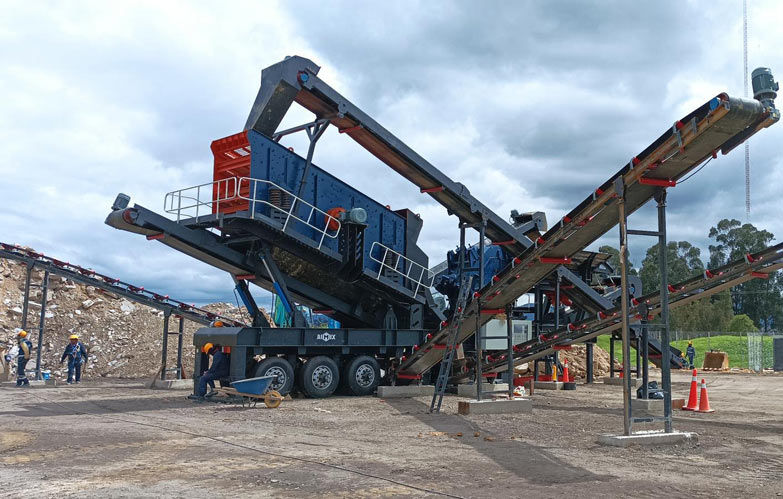
A profound transformation is sweeping through Latin America's mining and aggregate sectors. Driven by the relentless pursuit of operational efficiency, cost control, and enhanced safety, the industry is rapidly embracing automation at every level. This wave of technological adoption is fundamentally reshaping how raw materials are extracted and processed. While fixed installations are being upgraded, the most dynamic shift is occurring with mobile equipment. Once considered auxiliary or temporary solutions, the modern, automated mobile stone crusher plant(planta movil de trituracion) is now emerging as the strategic core of a new, agile, and highly efficient production paradigm. This evolution is enabling miners and aggregate producers to tackle the region's unique challenges—from remote and rugged terrain to volatile commodity prices—with unprecedented precision and productivity.

The Drivers of Automation: Necessity and Opportunity
Several converging forces are accelerating the automation drive in Latin American mining. First, the need to optimize costs in a competitive global market is paramount. Automation directly reduces reliance on a large, specialized workforce in hazardous environments, mitigates human error, and ensures equipment operates at its peak efficiency 24/7. Second, the increasing scarcity of skilled operators makes remote operation and autonomous control not just an advantage but a necessity for continuity. Third, stringent environmental and social governance (ESG) standards demand operations with a smaller physical footprint, reduced emissions, and minimized community disruption—goals perfectly aligned with the precision and efficiency of automated systems. In this context, the traditional fixed stone crusher plant, while powerful, often lacks the flexibility to adapt. This creates the perfect opportunity for mobile, intelligent solutions to take center stage.
The Evolution from Mobility to Intelligent Autonomy
The journey begins with basic mobility but culminates in full situational awareness. A contemporary mobile stone crusher plant is no longer just a crusher on wheels. It is an integrated processing node equipped with a suite of technologies:
Telematics and Remote Monitoring: Real-time data on location, fuel consumption, production rates, and machine health is streamed to a central office, enabling proactive management.
Automated Process Control: Crusher settings, feeder rates, and screen configurations can be adjusted automatically based on feed material analysis to maintain optimal product size and shape.
Advanced Safety Systems: Proximity detection, collision avoidance, and automated emergency shutdown protocols protect both personnel and equipment.
Key Automation Technologies Redefining Mobile Crushing
The integration of specific technologies is transforming these plants from manual machines into autonomous production units.
1. Remote Operation and Drone Integration
Operators can now control a mobile stone crusher plant from a safe, comfortable control room miles away. This is particularly valuable in the initial setup phase in unstable areas or in extreme weather conditions. Drones are used for pre-site surveying, stockpile volumetrics, and inspecting hard-to-reach areas of the plant, feeding critical visual data back to the operators and planning software.
2. Predictive Maintenance and AI-Powered Optimization
Sensors monitoring vibration, temperature, and pressure allow the system to predict component failures before they happen. This shift from reactive to predictive maintenance maximizes uptime—the single most important metric for any aggregate crusher plant(planta trituradora de agregados). Furthermore, artificial intelligence algorithms can analyze historical and real-time production data to recommend operational adjustments that maximize throughput while minimizing energy consumption and wear.
3. Fully Automated Crushing Circuits
The most advanced systems feature a high degree of automation within the crushing circuit itself. Automated tramp metal release systems in cone crushers protect the machinery instantly. Variable frequency drives (VFDs) on conveyors and crushers adjust power to the exact load. When linked with a primary excavator or loader equipped with payload measurement and guided loading, the entire feed-to-product flow can be optimized with minimal human intervention.
Practical Benefits for Latin American Operations
The move towards automated mobile plants delivers concrete, measurable advantages that address the region's specific operational challenges.
Unlocking Remote and Complex Deposits: Latin America is rich in mineral and aggregate deposits located in geographically challenging areas. An automated mobile stone crusher plant can be deployed, set up, and operated with a smaller on-site crew, making it economically viable to exploit these resources. It can follow the mining face in a large pit with minimal downtime for relocation.
Enhanced Safety and Risk Mitigation: By removing personnel from dangerous areas near crushers, screens, and dumping points, automation drastically reduces the potential for serious accidents. This is a critical social and ethical imperative for the industry.
Consistent, High-Quality Output: Automated systems maintain precise control over crushing parameters. This consistency is vital for producing aggregate that meets tight specifications for critical infrastructure projects, giving operators a competitive edge in markets where quality is paramount.
Data-Driven Decision Making: The wealth of operational data generated allows managers to make informed decisions about fleet deployment, maintenance scheduling, and process improvements, transforming operations from an art into a science.
The Strategic Integration: Mobile Units within a Fixed Network
The future does not see a binary choice between fixed and mobile plants, but rather their intelligent integration. A large, fixed primary aggregate crusher plant at a central quarry might be fed by several automated, mobile secondary and tertiary crushing units operating at different faces. These mobile units act as flexible, satellite processors, feeding pre-crushed material back to the central hub. This model combines the high-volume capacity of a fixed stone crusher plant(planta de trituracion) with the unparalleled flexibility and face-following capability of mobile units, creating a hybrid system that is both robust and adaptable.
Conclusion: The Agile, Intelligent Future
The accelerated automation of the Latin American mining and aggregate industry signifies more than just a technological upgrade; it represents a fundamental rethinking of production methodology. The automated mobile stone crusher plant has evolved from a supplementary tool to the new operational core for high-efficiency production. By offering a blend of flexibility, intelligence, and unparalleled efficiency, it provides the key to navigating the region's complex geological, economic, and social landscape. As automation technology continues to advance, these mobile, intelligent cores will become even more central, driving the industry towards a safer, more productive, and more sustainable future. Companies that embrace this shift will not only optimize their current operations but will also build a decisive competitive advantage for the decades to come.


留言