


Application of Digital Monitoring and Remote Maintenance in Aggregate Production Lines
- info515452
- 2025年11月5日
- 讀畢需時 4 分鐘
The rapid advancement of digital technologies has transformed traditional aggregate production lines into more intelligent, efficient, and sustainable systems. In the past, operators relied heavily on manual inspection and on-site supervision to monitor the status of crushers, conveyors, and screening equipment. Today, however, advanced digital monitoring and remote maintenance solutions allow producers to oversee every aspect of their aggregate crusher plant(planta trituradora de agregados) in real time — improving reliability, reducing downtime, and optimizing operational costs.

The Role of Digital Monitoring in Aggregate Production
Digital monitoring systems play a central role in modern aggregate operations. These systems continuously collect data from sensors installed throughout the stone crusher plant, including temperature, vibration, power consumption, and throughput. By analyzing this data, operators can gain valuable insights into machine health, production efficiency, and potential faults.
A well-designed monitoring system provides early warnings of irregularities, such as bearing wear, motor overloads, or unbalanced feeding. Instead of waiting for a breakdown, maintenance teams can plan timely interventions, minimizing the risk of unexpected downtime.
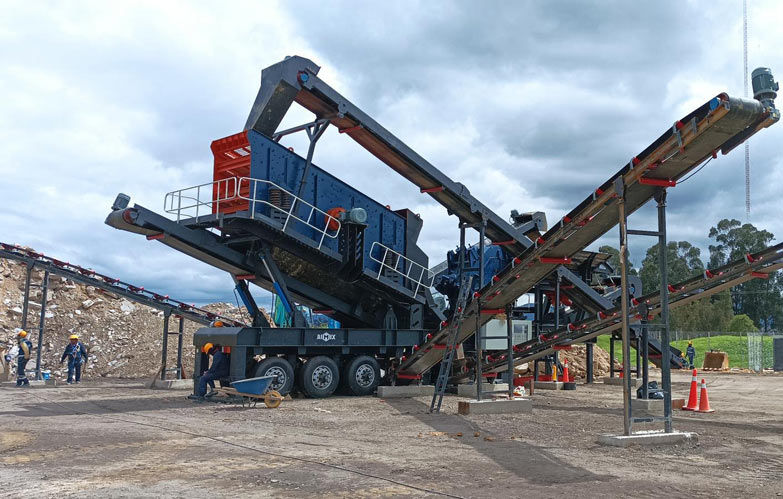
For example, in a mobile stone crusher, real-time monitoring can track hydraulic pressure, fuel consumption, and crusher chamber load to ensure optimal performance even in remote areas. These data-driven insights empower operators to make precise adjustments that enhance both efficiency and product quality.
Advantages of Remote Maintenance and Predictive Management
Remote maintenance is one of the most impactful outcomes of digital transformation in aggregate production. Through networked control systems, operators and technicians can access critical equipment parameters from anywhere, without being physically present on site.
When an alarm or anomaly is detected, maintenance engineers can remotely diagnose the issue, identify probable causes, and guide on-site personnel to perform corrective actions. This capability not only saves travel costs and time but also ensures a faster response to urgent problems.
Moreover, predictive maintenance—powered by artificial intelligence (AI) and machine learning—takes remote management a step further. By learning from historical data patterns, the system can predict component failures before they happen. For example, it can forecast the remaining life of conveyor belts or crusher liners, allowing maintenance to be scheduled precisely when needed.
This proactive approach significantly increases the uptime of aggregate crusher plants, ensuring a continuous supply of materials for construction projects and reducing maintenance budgets over time.
Integration with SCADA and IoT Platforms
Modern stone crusher plants(planta trituradora) are now being integrated into advanced SCADA (Supervisory Control and Data Acquisition) and IoT (Internet of Things) platforms. These systems create a centralized digital ecosystem where all equipment, from feeders to screens, can communicate and operate synergistically.
The SCADA dashboard offers a visual interface for operators to monitor process flow, track performance, and adjust parameters such as feed rate, crusher gap, or motor speed. Meanwhile, IoT sensors feed real-time information into cloud platforms, enabling remote supervision and data analytics at a corporate level.
In a mobile stone crusher fleet, IoT integration allows fleet managers to locate machines via GPS, monitor fuel usage, and evaluate performance remotely. This data can be used to optimize fleet deployment, prevent overload operations, and reduce idle time.
Cost Savings and Productivity Improvement
Digital monitoring and remote maintenance generate measurable cost benefits. A study of mid-sized aggregate crusher plants revealed that automated monitoring can cut unplanned downtime by up to 25%, while predictive maintenance reduces maintenance costs by approximately 20%.
The key lies in operational visibility. When plant operators have real-time information about machine performance, they can balance production loads, prevent material blockages, and improve energy efficiency. In addition, the ability to remotely configure settings means that production parameters can be adjusted instantly in response to changes in demand or material properties.
For smaller producers using mobile stone crushers(trituradora movil de piedra), this technology allows them to compete with larger players by maximizing utilization and maintaining consistent output, even with limited staff and resources.
Enhancing Safety and Environmental Compliance
Safety and environmental management are also strengthened through digitalization. Monitoring systems can detect abnormal vibrations or gas emissions early, preventing mechanical failures that could endanger personnel or cause pollution.
For example, in stone crusher plants, dust suppression systems can be automatically activated when sensors detect excessive particulate matter. Similarly, power usage and water recycling can be monitored to ensure compliance with sustainability standards and local regulations.
In high-altitude or remote areas, remote monitoring ensures that technical staff are exposed to fewer on-site hazards, as many operations can be handled digitally. This not only enhances safety but also reduces the carbon footprint associated with frequent travel for inspections.
Future Trends: Intelligent Automation and Cloud-Based Management
The next step for digital monitoring and remote maintenance in aggregate production is full automation combined with cloud-based management. Future aggregate crusher plants are expected to feature autonomous operation modes, where AI systems make decisions about load balancing, crusher speed, and maintenance scheduling automatically.
Additionally, cloud connectivity will enable global data sharing between multiple plants, allowing centralized control centers to oversee performance across several sites. This approach will standardize production quality, reduce human error, and further lower costs.
Manufacturers are also exploring augmented reality (AR) for remote maintenance. Through AR glasses or mobile devices, on-site workers can receive real-time guidance from remote engineers, improving accuracy and reducing downtime during complex repairs.
Conclusion
The integration of digital monitoring and remote maintenance technologies has redefined how stone crusher plants and aggregate crusher plants operate in today’s competitive construction materials industry. By enabling real-time visibility, predictive management, and remote control, these technologies enhance equipment uptime, optimize energy use, and ensure safer working conditions.
Whether applied to a stationary installation or a mobile stone crusher, digital transformation is proving to be the key to sustainable, cost-efficient, and high-performing aggregate production in the modern era.

留言