


Controlling the Proportion of Needle-and-Flaky Gravel in River Pebble Crushing Plants
- info515452
- 4月27日
- 讀畢需時 4 分鐘
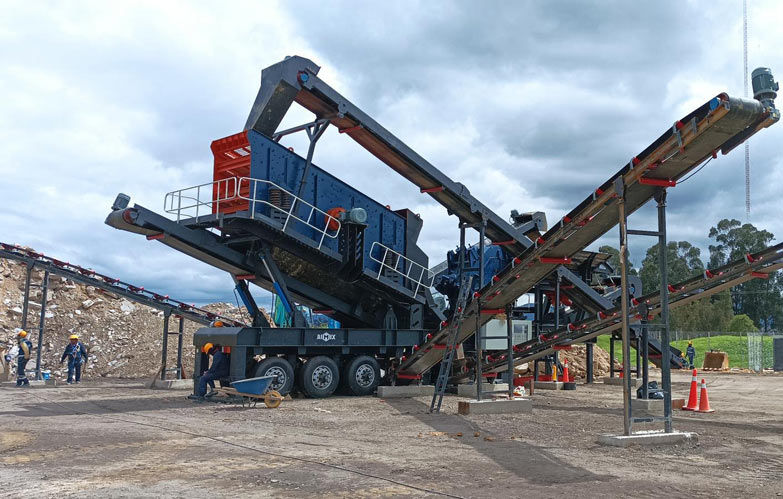
In the high-stakes world of infrastructure construction, the quality of aggregate can make or break the structural integrity of concrete and asphalt. River pebbles, known for their extreme hardness and smooth surfaces, are a popular raw material source, but they pose significant challenges during the crushing process. One of the most persistent issues faced by quarry operators is the high proportion of needle-and-flaky particles in the finished product. These elongated and thin fragments weaken the bonding strength of concrete and increase the consumption of cement and bitumen. To produce premium cubical aggregate, a well-engineered stone crusher plant(planta trituradora) must be configured specifically for the characteristics of river stone. By optimizing the crushing ratio and selecting the right equipment sequence, producers can meet the stringent technical standards required for high-grade highways and airport runways.
The Impact of Particle Shape on Construction Quality
The shape of the gravel is just as important as its mineral composition. Needle-like and flaky particles are defined as those whose greatest dimension is significantly larger than their smallest. In a professional stone crusher plant, monitoring these shapes is a daily priority. When these poor-quality fragments are used in a mix, they tend to bridge across each other, creating voids and reducing the workability of the concrete.
Furthermore, under the pressure of heavy rollers during road compaction, these fragile shapes are prone to breaking, which alters the carefully calculated gradation of the mix. For any contractor investing in a hard rock crusher(trituradora roca dura), the ultimate goal is to achieve a "cubical" shape, which provides better interlocking properties and a more stable skeleton for the final construction project.
Selecting the Right Crushing Equipment for River Pebbles
River pebbles are naturally rounded and incredibly tough, often containing high levels of silica. This means they require a specialized approach compared to softer materials like limestone. A standard configuration will not suffice; you need a system designed as a dedicated hard rock crusher to handle the high abrasion and compression strength.
The Role of the Jaw Crusher in Primary Reduction
The first stage of a stone crusher plant usually involves a jaw crusher. While its primary job is to reduce the size of the large pebbles, the setting of the discharge opening (CSS) directly influences the shape of the material entering the next stage. If the primary reduction is too aggressive, it can create internal micro-cracks in the stone, which later manifest as flaky particles during secondary crushing.
Secondary Crushing with Cone Crushers
For hard materials like pebbles, a cone crusher is the most effective choice for the second stage. Unlike impact crushers, which can suffer from high wear costs when facing silica-rich stone, a cone crusher uses inter-particle crushing principles. By maintaining a "choke-fed" condition—where the crushing chamber is kept full—the stones are forced to grind against each other rather than just the steel liners. This natural attrition helps round off sharp edges and significantly reduces the needle-and-flaky count.
The Necessity of a Sand Crusher for Tertiary Shaping
Even with a high-quality secondary stage, some elongated fragments will inevitably remain. This is where the third stage, often featuring a dedicated sand crusher(trituradoras de arena y grava) or Vertical Shaft Impactor (VSI), becomes indispensable for quality control.
Achieving the Cubical Shape with VSI Technology
A VSI is often referred to as a "shaping machine" in the industry. It uses a "rock-on-rock" crushing method where material is accelerated by a high-speed rotor and thrown against a curtain of falling stone. This high-velocity impact is the most effective way to break down flaky particles. If your stone crusher plant includes a VSI, the quality of the manufactured sand and small gravel will be vastly superior to that produced by compression alone.
Controlling the Fineness Modulus
Beyond just shape, a sand crusher allows the operator to fine-tune the gradation of the fine aggregates. By adjusting the rotor speed, you can control the impact energy, ensuring that the pebbles are not just broken, but engineered into the specific sizes required by modern high-performance concrete plants.
Operational Adjustments to Optimize Production
Equipment selection is only half the battle; the way the hard rock crusher is operated on a daily basis determines the final product consistency.
Closed-Circuit Grinding and Screening
One of the most effective ways to control particle shape is to operate the stone crusher plant in a closed circuit. This means that any material that does not meet the size or shape requirements after the first pass is returned to the crusher for another round of processing. This repetitive impact is particularly effective when using a sand crusher to "polish" the aggregates until they reach the desired cubical form.
Maintaining Consistent Feed Gradation
Fluctuations in the feed size can cause the crushing chamber to become unevenly loaded, leading to a spike in flaky output. Operators should ensure that the feed to the hard rock crusher is well-graded and consistent. Using vibrating feeders with grizzly bars to remove "undersize" material before it enters the primary jaw can also prevent the "cushioning" effect that often leads to poor particle shapes.
Achieving Long-Term Excellence in Aggregate Production
The demand for high-quality, cubical gravel is only set to increase as infrastructure standards become more rigorous across the globe. For quarry owners, the path to profitability lies in the ability to deliver a consistent, high-spec product that minimizes waste. By integrating a sophisticated stone crusher plant that respects the natural hardness of river pebbles, you can turn a challenging raw material into a premium asset.
Investing in a robust hard rock crusher for the primary stages and a high-velocity sand crusher for the final shaping stage provides a dual advantage: it lowers the wear costs per ton and ensures that your product is always the first choice for engineers. Ultimately, controlling the proportion of needle-and-flaky gravel is about more than just meeting a specification—it is about building a reputation for quality that stands the test of time in the competitive mineral processing market. Careful configuration and attentive operation are the keys to transforming simple river stones into the high-performance building blocks of tomorrow's cities.


留言