


How to Control Costs in Aggregate Production Lines?
- info515452
- 4月20日
- 讀畢需時 4 分鐘
Aggregate production is a margin business. A difference of one dollar per ton can determine whether a quarry stays profitable or closes its gates. Yet many operators focus only on equipment purchase price while ignoring the real cost drivers: energy consumption, wear parts, downtime, and material waste. This article provides practical methods to control costs across your aggregate production line, from feed to final stockpile. Whether you operate a stationary aggregate plant(planta de agregados) or a mobile stone crusher plant, these strategies will improve your bottom line. We will also discuss how the design of your aggregate crusher plant directly affects operating expenses.

Understanding the True Cost Structure of Aggregate Production
Most operators track direct costs like fuel and labor. But the largest hidden costs come from inefficiency. A poorly configured aggregate plant consumes 20 to 30 percent more energy than necessary. An undersized mobile stone crusher plant runs at full capacity for longer hours, accelerating wear. And a badly designed aggregate crusher plant produces excessive fines, wasting up to 15 percent of your saleable material. Before you can control costs, you need to measure them. Track cost per ton, not cost per hour.
The Three Biggest Cost Categories in Any Aggregate Plant
Energy (crushing and screening): 40–50% of operating costs
Wear parts (jaws, cones, screens, belts): 25–35%
Labor and maintenance: 15–25%
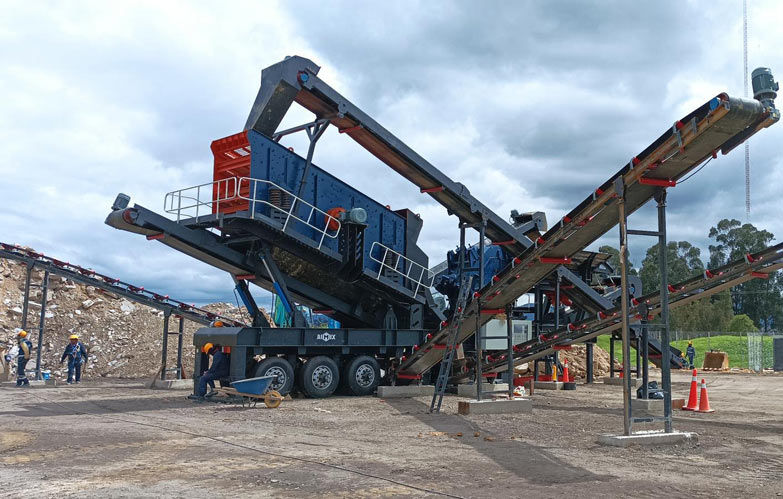
A mobile stone crusher plant(planta trituradora móvil) typically has higher fuel costs but lower labor requirements than a stationary aggregate plant. An aggregate crusher plant with multiple stages increases wear part expenses but produces higher-value cubical material. Your cost control strategy must match your plant type and product mix.
Strategy 1: Optimize Crusher Settings for Each Stage
The single most effective cost control measure is running each crusher at its optimal setting. A jaw crusher that is too tight produces excess fines and wears out liners faster. A cone crusher that is too open recirculates oversized material, wasting energy. For any aggregate plant, establish a standard operating procedure for closed side settings (CSS) based on feed size and desired output.
In a mobile stone crusher plant, operators often change settings rarely because it takes time to access the crusher. But that false economy costs more in energy and wear. Schedule CSS checks every shift. For a stationary aggregate crusher plant, install remote setting adjustment systems so operators can optimize without stopping production.
How to Reduce Fines Generation
Fines (material below 0.075mm) are often unsaleable or sold at a discount. Reducing fines keeps more tons in the product stream. Use these methods:
Avoid over-crushing by using the correct crusher for each stage
Use a scalping screen before the primary crusher to remove natural fines
Run cone crushers in choke-fed conditions to reduce inter-particle crushing
For a mobile stone crusher plant, slow the feed rate if you see excessive dust
A well-tuned aggregate crusher plant can reduce fines by 5 to 8 percent, directly adding to your saleable tons.
Strategy 2: Control Wear Part Costs Through Smart Selection
Wear parts are a recurring expense you cannot eliminate, but you can optimize. High-manganese steel jaws last longer than standard manganese but cost more upfront. The breakeven point depends on your tonnage. For a small aggregate plant crushing less than 100,000 tons per year, standard parts may be more economical. For high-volume production, premium parts reduce changeout downtime.
For a mobile stone crusher plant, consider parts availability and changeout time. A plant that takes eight hours to change jaw liners costs you a full shift of production. Some manufacturers offer quick-change systems. When evaluating an aggregate crusher plant(planta chancadora de áridos) for purchase, ask for average liner life in tons and changeout time in hours.
The Role of Wear Material Hardness Matching
Match your wear part material to the rock you crush. Abrasive rocks like granite wear manganese liners faster. Use higher carbon manganese (18–22% Mn) for abrasive applications. Less abrasive rocks like limestone allow standard 12–14% Mn liners. The wrong match doubles your wear part budget. This applies equally to a stationary aggregate plant and a mobile stone crusher plant.
Strategy 3: Reduce Energy Consumption Per Ton
Energy is usually the largest single cost in an aggregate plant. Electric motors are cheaper to run than diesel engines, but not all sites have grid power. If you operate off-grid, a mobile stone crusher plant with a diesel-electric hybrid system can reduce fuel consumption by 15 to 20 percent compared to full diesel hydraulic systems.
Other energy-saving measures:
Install variable frequency drives (VFDs) on conveyors to run only when loaded
Use belt scales to feed crushers at optimal rates (not over or under)
Schedule crushing during off-peak electricity hours where rates vary
For an aggregate crusher plant, use surge bins to create steady feed rather than stop-start cycling
A well-designed aggregate plant should consume between 1.5 and 3.0 kWh per ton, depending on rock hardness and reduction ratio. If your mobile stone crusher plant exceeds 4.0 kWh per ton, investigate causes immediately.
Strategy 4: Minimize Downtime Through Preventive Maintenance
Every hour of unplanned downtime costs you production and labor. Track mean time between failures (MTBF) for each major component. For a mobile stone crusher plant, keep a spare belt, set of jaw liners, and key hydraulic hoses on site. For a stationary aggregate crusher plant, maintain a log of bearing temperatures and vibration readings to predict failures before they happen.
Create a simple checklist for daily, weekly, and monthly inspections. Train every operator to perform the daily check. Most breakdowns are preceded by warning signs—unusual noise, temperature rise, or vibration. Catching these early in an aggregate plant saves thousands in repair costs and lost production.
Practical Steps to Lower Your Cost Per Ton Today
Controlling costs in aggregate production is not about one big change. It is about dozens of small improvements. Start by measuring your current cost per ton. Then optimize crusher settings to reduce fines and recirculation. Select wear parts that match your rock hardness. Reduce energy use with VFDs and steady feeding. And implement a preventive maintenance schedule that catches problems early. Whether you run a stationary aggregate plant, a mobile stone crusher plant, or a fixed aggregate crusher plant, these strategies will improve your margins. The best time to start is today—your next ton of aggregate will be cheaper than the last one.
留言