


From Equipment Selection to Capacity Layout: A Systems Engineering Methodology for Aggregate Plants
- info515452
- 3月18日
- 讀畢需時 5 分鐘
Designing a successful crushing operation requires far more than simply purchasing equipment and arranging it on a site. Without a systematic methodology, even well-chosen machines can fail to deliver expected production, produce inconsistent material quality, or generate excessive operating costs. Systems engineering provides the framework for approaching aggregate plant design holistically, considering how each component interacts with others and how the entire operation fits within project constraints. For contractors evaluating aggregate crusher plant(planta trituradora de agregados) options, understanding this methodology transforms equipment selection from guesswork into engineered decision-making. This article presents a practical systems approach that guides operators from initial concept through final commissioning.
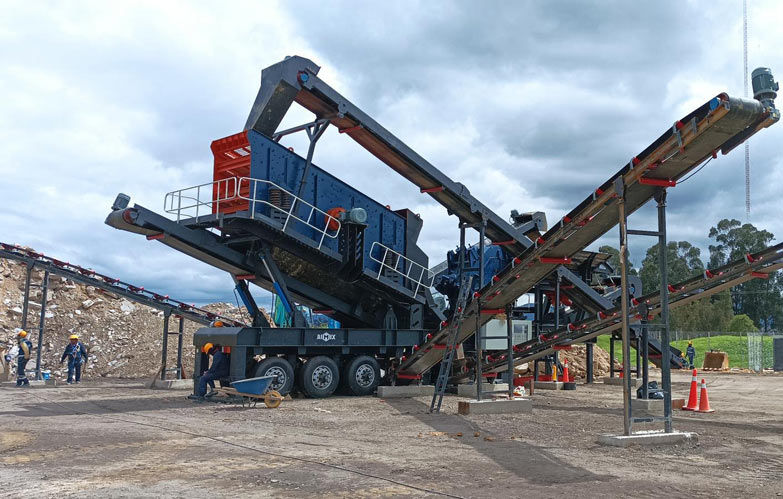
Understanding the Systems Engineering Approach
Systems engineering treats the entire crushing operation as an integrated whole rather than a collection of independent machines. This perspective recognizes that changes in one area inevitably affect others, and that optimizing individual components may actually reduce overall system performance.
Defining Project Requirements
Every successful aggregate plant begins with clearly defined requirements. Before investigating specific equipment or calculating capacities, project stakeholders must answer fundamental questions about the operation's purpose. What materials will be processed? What product specifications are required? What production volumes must be achieved? How will the site conditions affect layout options? These requirements establish the foundation for all subsequent decisions.
When exploring stone crusher plant(planta de trituracion y cribado) configurations, operators should document both current needs and anticipated future requirements. A system designed with expansion capability may carry higher initial costs but proves more economical than complete replacement when production demands increase.
Material Characterization and Testing
Understanding the material to be processed represents the most critical technical input to systems design.
Conducting Comprehensive Material Analysis
Before selecting any equipment, operators should commission thorough testing of representative material samples. This analysis must determine hardness, abrasiveness, moisture content, and particle size distribution of the feed material. These characteristics directly influence crusher type selection, wear part life expectations, and screening requirements.
For a stone crusher plant processing highly abrasive materials, for example, equipment with wear-resistant liners and slower operating speeds may prove more economical than higher-speed alternatives despite higher initial costs. Material testing provides the data necessary for these informed trade-off decisions.
Variability Assessment
Natural materials rarely exhibit uniform characteristics throughout a deposit. Effective systems engineering accounts for expected variability in feed material, designing flexibility into the aggregate crusher plant that accommodates changes without production interruptions. This may include adjustable crusher settings, multiple screening options, or surge capacity that buffers processing fluctuations.
Equipment Selection Methodology
With material characteristics understood, the systematic selection of individual components begins.
Primary Crusher Selection Criteria
The primary crusher establishes the foundation for all subsequent processing. Selection decisions must balance multiple factors including feed size, capacity requirements, material characteristics, and downstream considerations. Jaw crushers typically excel with hard, abrasive materials and large feed sizes, while impact crushers may offer higher reduction ratios for less abrasive materials.
When evaluating stone crusher for sale(trituradora de piedra en venta) options, operators should request performance data specific to their material rather than relying on generic specifications. Reputable manufacturers can provide test results or computational simulations that predict real-world performance.
Secondary and Tertiary Considerations
Downstream crusher selection must account for the output from upstream equipment while delivering final product specifications. Cone crushers often provide excellent particle shape for hard materials, while vertical shaft impactors may be specified when premium cubical aggregates command higher prices. The aggregate crusher plant design should include sufficient flexibility in these stages to adjust to changing material characteristics or product requirements.
Screening System Integration
Screens represent the quality control gatekeepers of any crushing operation. Selection must consider not only total area but also screen type, deck configuration, and media options appropriate for the material. When designing a stone crusher plant, sufficient screening capacity prevents bottlenecks that constrain overall production.
Capacity Planning and Flow Analysis
Determining appropriate capacities for each system component requires careful analysis of material flow throughout the operation.
Establishing Design Capacity Parameters
Systems engineering distinguishes between average required capacity and peak design capacity. An aggregate crusher plant designed exactly to average requirements will inevitably experience bottlenecks during periods of peak demand or when processing difficult material. Industry practice typically specifies design capacities 15-25% above average requirements to provide operational margin.
Flow Modeling and Simulation
Modern design methodologies employ computer simulation to model material flow through proposed configurations. These tools identify potential bottlenecks, evaluate surge capacity requirements, and optimize equipment arrangements before any physical construction begins. For complex stone crusher plant designs, simulation often reveals issues that would remain hidden until operation begins.
Surge and Stockpile Positioning
Strategic placement of surge piles and stockpiles decouples processing stages, allowing each to operate independently. A well-designed aggregate crusher plant incorporates surge capacity between primary and secondary stages, between crushing and screening, and ahead of load-out systems. These buffers absorb production fluctuations and maximize overall utilization.
Site Layout and Spatial Optimization
Physical arrangement of equipment significantly affects operational efficiency and maintenance accessibility.
Developing Efficient Material Flow Paths
The most effective layouts minimize material handling between processing stages. Designing straight-line flow where topography allows reduces conveyor lengths and transfer points. When evaluating stone crusher for sale options, operators should consider how each unit's physical configuration affects overall layout possibilities.
Maintenance Access Considerations
Equipment that cannot be accessed for maintenance will eventually fail. Systems engineering incorporates adequate clearances around all components for routine service activities, component replacement, and emergency repairs. The stone crusher plant layout should provide crane access to major components and space for service vehicles to maneuver.
Expansion Provision
Thoughtful layouts anticipate future growth by positioning equipment to accommodate additional processing stages. Even when current requirements don't justify a full aggregate crusher plant configuration, leaving space for expansion reduces future disruption and costs.
Electrical and Control System Design
Modern crushing operations depend on sophisticated control systems for optimal performance.
Power Distribution Planning
Electrical system design must account for starting currents of large motors, voltage drop over distances, and redundancy requirements. For remote locations where grid power may be unreliable, generator sizing should consider both running loads and starting requirements of the largest motors in the stone crusher plant.
Automation and Monitoring Integration
Contemporary control systems provide real-time monitoring of production rates, power consumption, and component health. These systems optimize crusher settings automatically, respond to changing conditions, and alert operators to developing issues before failures occur. When comparing stone crusher for sale options, automation capabilities significantly affect long-term operating costs and production consistency.

Implementation and Commissioning
Translating design into operational reality requires careful execution.
Installation Quality Assurance
Proper installation determines whether designed performance becomes actual performance. Alignment tolerances, foundation curing, and connection integrity all affect long-term reliability. Engaging experienced installers familiar with aggregate crusher plant requirements proves essential for successful implementation.
Systematic Commissioning Procedures
Commissioning should proceed in stages, verifying each subsystem before integrating with others. Starting with empty system testing, progressing to load testing with controlled materials, and finally achieving full production allows identification and resolution of issues without catastrophic failures.
Achieving Optimal Performance Through Systematic Design
The systems engineering methodology transforms aggregate plant design from art to science, replacing guesswork with engineered decisions based on material characteristics, capacity requirements, and operational constraints. By treating the entire operation as an integrated system rather than a collection of independent machines, this approach delivers aggregate crusher plant configurations that consistently meet production targets while minimizing operating costs. For operators evaluating stone crusher plant options, understanding this methodology enables meaningful comparisons between proposals and informed decisions about design trade-offs. The investment in systematic design, including thorough material testing, flow modeling, and layout optimization, pays returns throughout the operation's life through reliable production, manageable maintenance, and the flexibility to adapt to changing requirements. Whether considering a small portable operation or a large stationary aggregate crusher plant, applying systems engineering principles ensures that equipment selection and capacity layout work together to achieve optimal performance. And when the time comes to evaluate stone crusher for sale options, this systematic approach provides the framework for selecting equipment that truly fits the operation's needs rather than simply the lowest initial price.

留言