


How Aggregate Yards Achieve Stable Gradation and Continuous Supply?
- info515452
- 1月20日
- 讀畢需時 4 分鐘
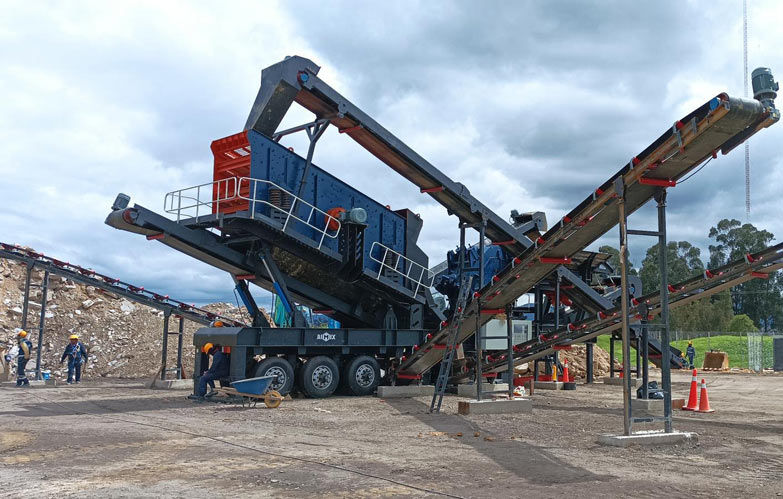
In the mining and construction industries, consistent aggregate quality and uninterrupted supply are essential for producing high-performance concrete, asphalt, and other construction materials. Aggregate yards serve as the backbone of these operations, ensuring that crushed stone and gravel meet project specifications and are available when needed. For plants operating an aggregate crusher plant(planta chancadora de agregados), stone crusher plant, or jaw crusher, effective yard management is critical for maintaining stable gradation and continuous production, which directly impacts profitability and client satisfaction.
Aggregate yards are not just storage spaces—they are dynamic operational hubs where material handling, quality control, and production scheduling intersect. Proper organization and equipment utilization allow operators to maintain uniform particle size distribution, optimize crusher output, and meet the demands of multiple projects simultaneously. Understanding how yards achieve these goals provides insights into operational best practices and strategic planning for aggregate producers.

Ensuring Stable Gradation Through Equipment and Process Control
Role of Crushers in Gradation Control
The first step in achieving stable gradation is selecting the right crushing equipment. Jaw crusher units, commonly used for primary crushing, are effective in reducing large rocks into manageable sizes while maintaining a consistent feed for secondary crushers in the aggregate crusher plant. Proper operation of jaw crushers ensures that oversized material does not disrupt downstream processing, which is essential for maintaining gradation stability.
Secondary and tertiary crushing, often performed by stone crusher plant(plantas de trituración) systems with cone or impact crushers, further refines particle size. By controlling the settings of these crushers, operators can produce aggregates that meet specific grading requirements for concrete or asphalt applications. Regular calibration and monitoring of equipment are essential to avoid variations in output that can affect mix designs and structural performance.
Screening and Stockpiling Strategies
Screening is another critical step in gradation control. After crushing, aggregates pass through vibrating screens to separate them by size. A well-organized aggregate crusher plant integrates screening with crushing to ensure uniform particle distribution across stockpiles. Stockpiles are maintained in layers according to size and gradation, allowing operators to blend material strategically when filling orders. This approach minimizes variability and ensures consistent concrete performance on construction sites.
Proper stockpile management also prevents segregation of fine and coarse particles. Using conveyors and feeders in the stone crusher plant, material can be placed evenly and reclaimed from multiple points within the pile. This blending ensures that each batch of aggregates maintains the desired gradation, even during high-demand periods or when the feed source varies in composition.
Achieving Continuous Supply Through Yard Organization
Optimizing Material Flow
Continuous supply relies on smooth material flow from crushing to dispatch. Aggregate yards are laid out to minimize transport distances and reduce handling time. For plants with jaw crusher(trituradora de muelas) units feeding the aggregate crusher plant, separating primary, secondary, and tertiary material flow ensures uninterrupted operation. This separation allows each crusher to run at optimal capacity, reduces bottlenecks, and keeps production steady even when certain stockpiles are being loaded for delivery.
Buffer Stock and Demand Planning
Maintaining buffer stock is key to continuous supply. By analyzing project demand, aggregate yards can store sufficient quantities of each size fraction produced by the stone crusher plant. This allows operators to fulfill multiple orders without waiting for new crushing cycles, maintaining a predictable flow of materials to customers. Planning buffer levels according to seasonal fluctuations, transportation schedules, and site-specific requirements ensures that supply remains uninterrupted.
Equipment Maintenance and Downtime Management
Downtime can significantly disrupt supply. Preventive maintenance of jaw crusher units, conveyors, and screening equipment ensures that the aggregate crusher plant and stone crusher plant operate reliably. Scheduling maintenance during low-demand periods or having standby equipment reduces the risk of production gaps. Proper maintenance not only protects the investment in machinery but also guarantees that continuous supply commitments can be met.
Integrating Technology for Consistency and Efficiency
Automated Monitoring and Control Systems
Modern aggregate yards increasingly rely on automation to maintain gradation and supply. Sensors and control systems in the aggregate crusher plant monitor feed rates, crusher load, and particle size output. Real-time data allows operators to make adjustments quickly, ensuring consistent gradation and preventing bottlenecks. Similarly, stone crusher plant automation can coordinate multiple crushers and conveyors, optimizing material flow and minimizing waste.
Predictive Analysis for Production Planning
Predictive software can analyze historical production data from jaw crusher and other plant equipment to forecast demand and adjust crushing schedules. This allows aggregate yards to maintain continuous supply while minimizing overproduction and stockpile management issues. By leveraging technology, plants can optimize both equipment utilization and operational efficiency, resulting in stable cash flow and reliable customer service.
Driving Operational Excellence in Aggregate Yards
Stable gradation and continuous supply are achieved through a combination of effective equipment use, strategic yard layout, and technology integration. Well-managed aggregate crusher plant, stone crusher plant, and jaw crusher systems ensure consistent particle size, smooth material flow, and rapid response to market demand. By focusing on process control, preventive maintenance, and smart stockpile management, aggregate yards become key drivers of both operational efficiency and financial performance.
Ultimately, the success of an aggregate yard depends on its ability to synchronize crushing, screening, and dispatch operations. Plants that invest in proper equipment selection, yard design, and automation can consistently meet client requirements, maintain high-quality production, and secure a competitive advantage in the mining and construction sectors. With these strategies, aggregate yards not only support construction projects but also strengthen the long-term profitability of aggregate producers.


留言