


Future Technological Upgrades for Mobile Stone Crushers
- info515452
- 2025年8月25日
- 讀畢需時 3 分鐘
The mining and construction aggregate industry is rapidly evolving, with mobile crushing solutions taking center stage in efficient, flexible production. Mobile stone crushers have already transformed on-site operations, enabling operators to reduce transportation costs, increase productivity, and process material directly at the extraction or demolition site. Looking ahead, technological upgrades promise to enhance performance, sustainability, and intelligence, extending the capabilities of these machines for a wide range of applications, including concrete crusher and debris crusher operations.
Increasing Automation and Smart Controls
Automation is at the forefront of future developments for mobile crushing equipment(trituradora movil de piedra). As projects demand higher efficiency and stricter quality standards, integrating intelligent control systems is becoming essential.
PLC-Based and AI-Assisted Operation
Future mobile stone crushers will rely heavily on PLC-based controls and AI-assisted systems to optimize production. AI algorithms can predict optimal crushing speeds, monitor load variations, and adjust feed rates automatically. This reduces human error, improves consistency in particle size distribution, and enhances overall plant efficiency.
Remote Monitoring and Predictive Maintenance
Integration of telematics and IoT technologies enables operators to monitor the status of crushers in real-time. Remote dashboards will provide critical data on motor temperatures, vibration levels, and wear parts, allowing predictive maintenance scheduling. This approach minimizes unplanned downtime and extends the service life of components, which is particularly valuable for high-demand applications such as concrete crusher operations on construction sites.

Enhanced Energy Efficiency and Sustainability
Energy consumption and environmental impact are central concerns for future mobile crusher designs. Reducing fuel use and emissions while maintaining production capacity is a major trend.
Electrification and Hybrid Drives
Future mobile stone crushers are likely to feature hybrid or fully electric drive systems. These systems provide cleaner energy consumption, lower operational costs, and reduced noise, making them suitable for urban and environmentally sensitive areas. Electric drives also allow for precise speed control, improving crushing efficiency and reducing wear on internal components.
Dust Suppression and Waste Management
Next-generation mobile crushers will incorporate advanced dust suppression technologies and waste handling systems. Efficient filtration, water misting systems, and enclosure designs will minimize dust emissions, while integrated recycling solutions will enable more effective processing of demolition materials in debris crusher(trituradora de escombro) applications. These improvements contribute to safer and more environmentally compliant operations.
Modular and Multi-Functional Designs
The trend towards modularity is reshaping mobile crushing solutions. Manufacturers are designing units that can switch between stone, concrete, and debris processing without significant downtime.
Versatile Crushing Modules
Future mobile plants will include interchangeable modules for different materials. For example, a module optimized for rock crushing can be replaced with a concrete crusher(trituradora de concreto) or debris crusher module depending on project requirements. This flexibility allows contractors to maximize return on investment and handle diverse projects with a single machine.
Compact and Transportable Units
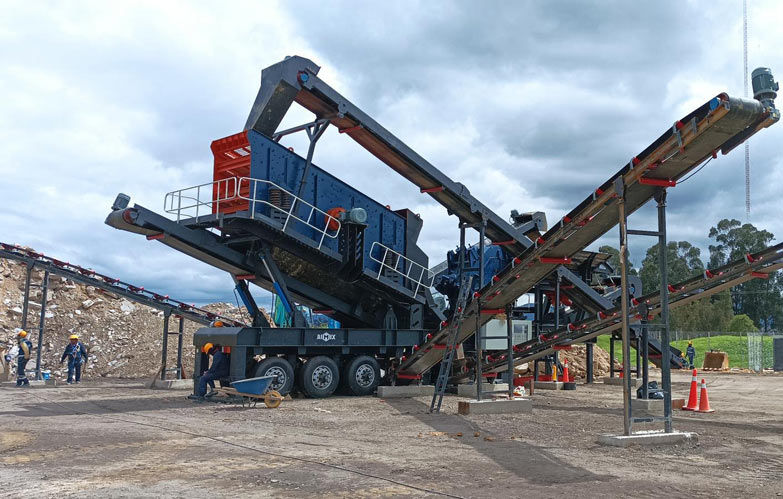
As construction sites become more constrained, future designs will focus on compact, easily transportable crushers. Quick setup times and small footprints will enable contractors to deploy units in urban areas or remote sites efficiently. Modular design also facilitates maintenance and upgrades without extensive disassembly.
Advanced Data Analytics and Process Optimization
Data-driven decision-making is becoming a key aspect of mobile crusher operation. Future upgrades will leverage analytics to optimize production and reduce operational costs.
Real-Time Performance Analytics
Sensors integrated into the crusher system will collect real-time data on output size, feed rate, and machine efficiency. Using this data, operators can make immediate adjustments to maintain consistent product quality and optimize energy usage. This is particularly important in continuous operations where downtime and suboptimal performance can significantly impact profitability.
Integration With Project Management Systems
Future mobile stone crushers may be connected to broader project management platforms, allowing site managers to track material production, delivery schedules, and inventory levels. Integration streamlines supply chain operations and ensures that materials meet construction requirements for both concrete crusher and debris crusher applications.
Emphasis on Safety and Operator Convenience
Improved safety features and user-friendly interfaces are also expected to be standard in next-generation mobile crushers.
Ergonomic Design and Intuitive Controls
Operator cabins will be redesigned for comfort and efficiency, with intuitive touchscreen HMIs and automated safety interlocks. These features reduce training time, minimize errors, and ensure compliance with occupational safety standards.
Remote Operation Capabilities
Remote operation capabilities will allow operators to manage crushers from a safe distance, reducing exposure to dust, noise, and vibration. This technology is particularly valuable in demolition sites where debris crusher operations carry inherent hazards.
Conclusion
The future of mobile stone crushers is shaped by automation, energy efficiency, modularity, and intelligent analytics. Upgrades in these areas will enhance operational flexibility, reduce costs, and improve environmental compliance, making mobile crushing equipment even more essential for modern mining and construction projects. Whether processing natural rock, operating as a concrete crusher, or handling construction debris with a debris crusher, these technological innovations promise to transform the way materials are crushed, processed, and delivered across diverse project sites worldwide.

留言