


Upgrading Directions Of Stationary Aggregate Plants In Latin America Under Increasingly Stringent Environmental Regulations
- info515452
- 2025年12月29日
- 讀畢需時 4 分鐘
Across Latin America, environmental supervision of the mining and aggregates industry is tightening at an unprecedented pace. From Chile’s updated particulate matter standards to Brazil’s stricter water discharge permits and Colombia’s new noise-control guidelines, stationary crushing operations are under mounting pressure to modernize. For owners of an aggregate crusher plant(planta trituradora de agregados), these changes are not merely compliance issues; they are reshaping how a traditional stone crusher plant is configured, operated, and financed. Even operators of a small stone crusher in rural markets are now facing inspection requirements that did not exist five years ago.
This article outlines the main upgrading directions for stationary aggregate plants under the new regulatory environment and provides practical guidance on how to implement each improvement without disrupting production continuity.

Why Environmental Regulations Are Becoming A Strategic Driver
The Shift From Penalties To Licensing Control
Environmental authorities are moving away from post-violation penalties toward pre-approval licensing systems. In Peru, Mexico, and Chile, new aggregate operations are required to demonstrate dust, noise, and water management systems before receiving operating permits.
This means plant upgrades are no longer reactive investments. They are now prerequisites for market access.
Investor And Community Pressure
In many Latin American countries, community consultations are mandatory for mining projects. Plants that lack visible environmental mitigation measures face stronger social resistance, project delays, or license rejection.
Dust Emission Control Upgrades
Enclosed Crushing And Screening Lines
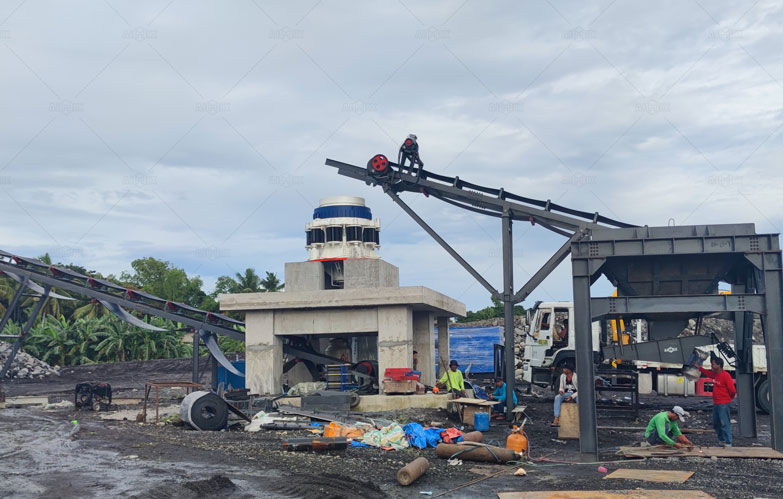
Open-frame crushing lines(planta de trituracion y cribado) are being replaced with semi-enclosed or fully enclosed systems. These structures isolate dust sources while maintaining access for maintenance.
Practical actions include:
Installing steel cladding around primary and secondary crushers
Adding flexible sealing curtains at conveyor transfer points
Retrofitting existing structures instead of full replacement
These modifications can reduce fugitive dust emissions by 40–60 percent.
Intelligent Spraying And Fog Systems
Traditional water spraying often leads to over-wetting and material loss. Modern fog cannon systems generate micron-sized droplets that bind dust particles without soaking aggregates.
Best practice is to integrate spray activation with belt conveyor sensors so spraying only occurs when material flow is detected.
Noise And Vibration Reduction
Low-Noise Equipment Selection
Regulations in urban-adjacent zones now impose maximum decibel levels at plant boundaries. To comply, plant owners are upgrading to:
Rubber-lined hoppers
Low-speed high-torque motors
Variable frequency drives on feeders
These changes reduce mechanical impact noise and extend equipment service life.
Acoustic Barriers And Foundations
Concrete noise walls around crushing stations can reduce sound transmission by up to 20 dB. In high-capacity plants, vibration-isolated foundations prevent resonance from propagating into surrounding communities.
Water And Slurry Management Improvements
Closed-Loop Water Recycling
Many jurisdictions no longer permit untreated slurry discharge. Closed-loop water systems now form the backbone of compliant stone crushing operations.
Key components include:
Settling tanks for fines separation
Filter presses for sludge dewatering
Reuse circuits for spray and washing systems
These systems reduce fresh water consumption by over 70 percent.
Stormwater Control Infrastructure
Rainy seasons pose contamination risks when runoff carries fines into nearby rivers. Proper drainage channels, sediment traps, and sealed stockpile areas are now required design elements.
Energy Efficiency And Carbon Footprint Reduction
High-Efficiency Motors And Drives
Replacing outdated motors with IE3 or IE4 efficiency-grade units cuts energy consumption by 8–12 percent annually. Variable frequency drives further optimize load matching during partial-capacity operation.
Solar Integration And Hybrid Power
In regions with unstable grids, especially in Central America, hybrid systems combining grid power with on-site solar generation are gaining popularity. This not only improves supply reliability but also supports corporate sustainability reporting.
Digitalization And Compliance Automation
Environmental Monitoring Systems
Real-time monitoring of dust concentration, noise levels, and water quality is increasingly mandatory. Modern plants deploy sensor networks connected to cloud platforms that generate compliance reports automatically.
This reduces administrative burden and enables early detection of abnormal conditions.
Intelligent Process Control
Automation platforms now integrate environmental parameters into the crushing process itself. For example, belt speed can be automatically reduced during high dust events to maintain compliance thresholds.
Upgrade Strategies For Different Plant Sizes
Large And Medium Plants
Owners of high-capacity aggregate crusher plants should prioritize modular upgrades that allow phased implementation without halting production. Retrofitting one production line at a time minimizes downtime and spreads capital expenditure.
Small And Rural Plants
Even operators of a small stone crusher(trituradora de piedra pequeña) must now meet baseline standards. Cost-effective solutions include:
Portable dust collectors at transfer points
Local acoustic enclosures around primary crushers
Simplified settling ponds with periodic sludge removal
These measures deliver significant compliance gains with limited investment.
Financial And Operational Benefits Of Proactive Upgrading
While environmental upgrades require capital outlay, the financial returns are tangible. Plants that modernize typically experience:
Lower equipment wear rates
Reduced water and energy bills
Higher acceptance in government tenders
Faster licensing approval cycles
In competitive Latin American markets, these advantages translate directly into higher asset utilization and improved long-term profitability.
Conclusion
Environmental regulation is no longer an external constraint on stationary aggregate operations in Latin America. It is a central design parameter shaping the future of every stone crusher plant, from large quarry complexes to small rural crushing sites. By adopting a structured upgrade strategy focused on dust, noise, water, energy, and digital compliance, plant owners can not only meet regulatory demands but also secure a more resilient and sustainable business model for the years ahead.

留言